• Skip to primary navigation
  • Skip to main content
  • Skip to primary sidebar
jeroenv

jeroenv

  • home
  • Publications
  • About
  • Show Search
Hide Search

portfolio

Tensor Sympathy

· ·

Inner Ear. Tensor tympani highlighted.
Henry Gray (1918) Anatomy of the Human Body.

This project is open-sourced and available on my Git Hub page.

Tensor Sympathy is a working prototype that allows communication via the Tensor Tympani (a muscle in the human inner ear) and a vibration sensor connected to a pc as a single-click device such as a tiny microphone.

The installation questions the role we attach to our senses taken for granted. We use our eyes for seeing, our ears for hearing, and our skin to feel. But, is it possible that some of our senses can change or even reverse roles?
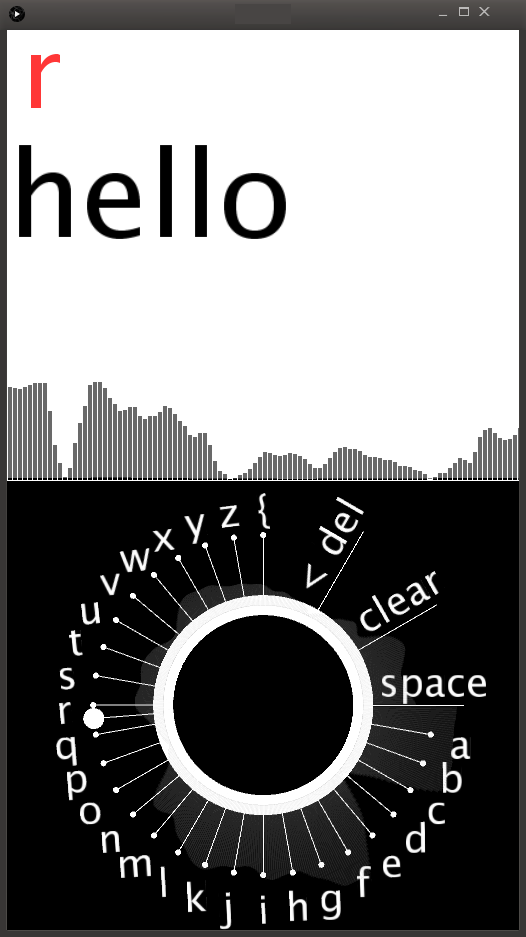
App Interface

A text message can be written on the screen by flexing an inner ear muscle at the right time the rotor passes the wanted character.

Projected use: While this is a demonstration project only, it might be used by individuals with limited physical ability, but it’s easy to learn.

Tensor Sympathy is a work in progress and there’s certainly much to improve and functionality to add like predictive writing and an improved -perhaps wireless- vibration sensor. A significant amount of time went into fine-tuning the software just to be able to filter the required input signal from noise.

The name of the project ‘Tensor Sympathy’ is a play on the words ‘Tensor Tympani’.
Contact me if you need help with implementation or if you would like to know more about this project.
Evolving Asteroid Starship

· ·

Evolving Asteroid Starship is a multidisciplinary cocreated research project investigating the possibility of utilizing an interstellar asteroid for future human exploration and colonization led by Angelo Vermeulen.

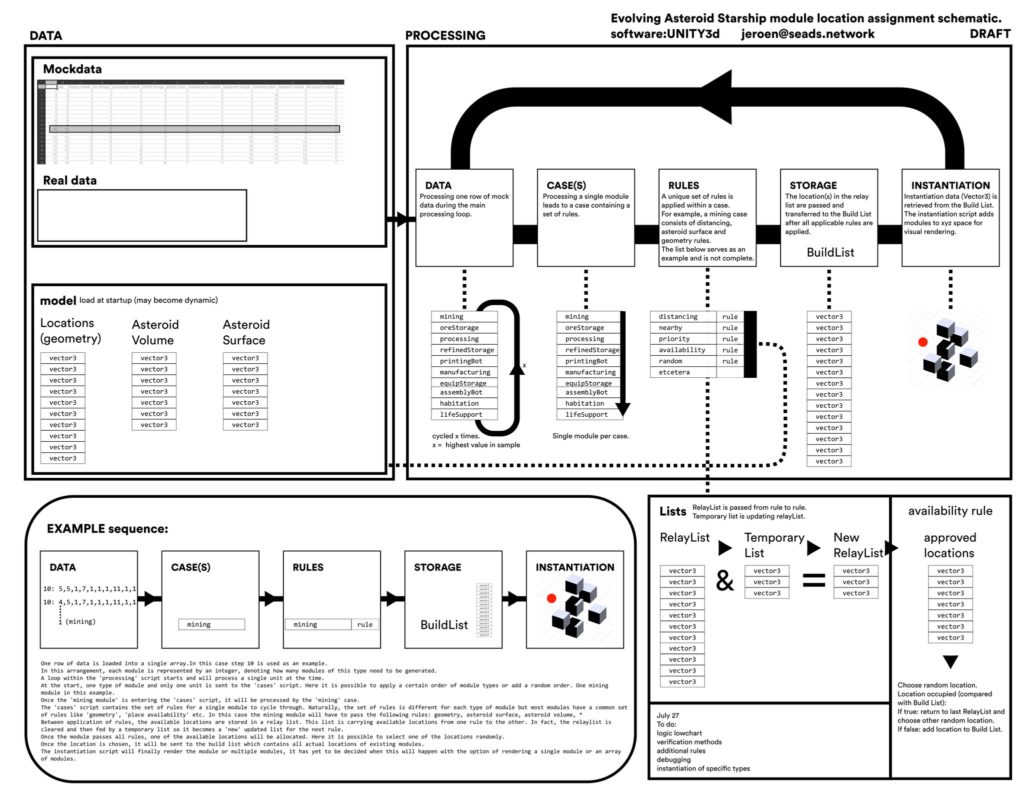
This page represents my personal contribution only, the module address assignment algorithm, a tiny fraction of this extensive co-creating project of students, researchers, and artists. The C# script can be found in my GitHub repository.

Summary
A complex algorithm taking into account various flavors of lifeforms continuously produces a virtual array of required modules in order to grow, adapt and sustain a human colony living in the ‘shadow’ cone of an interstellar asteroid. 

A second algorithm is fed by this data and assigns a valid address in physical space to each newly produced module according to positioning rules. The starship’s self-replicating architecture is in continuous flux as growth and recycling happen within different levels of the ecosystem. All modules have the same exterior proportions of a truncated octahedron, however, each module will be assigned one of the nine different functionalities at its core to be part of a regenerative ecosystem. 

Module Types

  1. Collision shielding
  2. Regenerative life support
  3. Habitation
  4. Radiation shielding
  5. Mining
  6. Processing
  7. Manufacturing
  8. Ore storage
  9. Refined materials storage

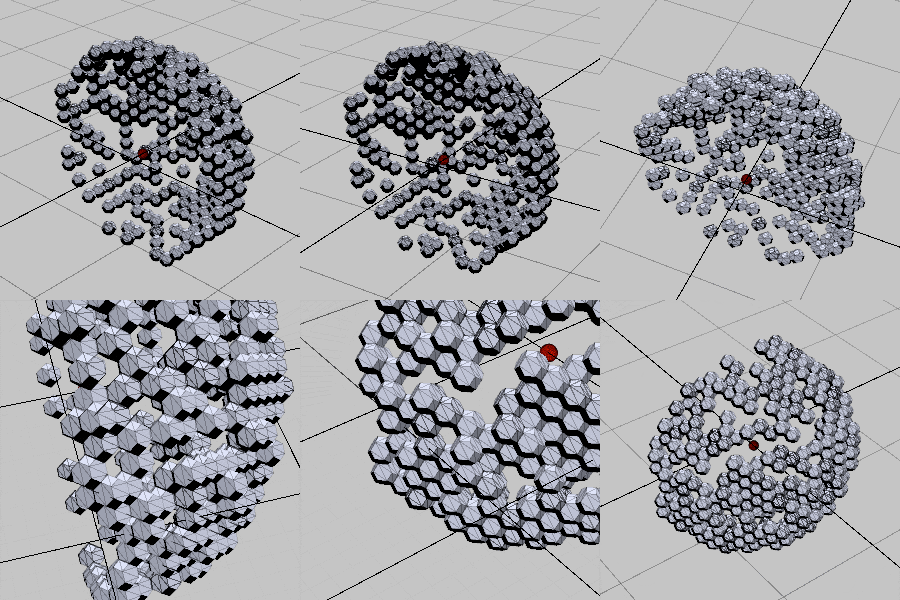
At the start of the assignment, I was searching for a platform to write the module assignment algorithm. Initially, Processing (Java) was chosen for quick prototyping and form exploration and this really helped me gain ideas about how to assign valid module addresses inside a virtual space. However, we opted to build the visualization model with Unity3d/C# for render and media purposes.

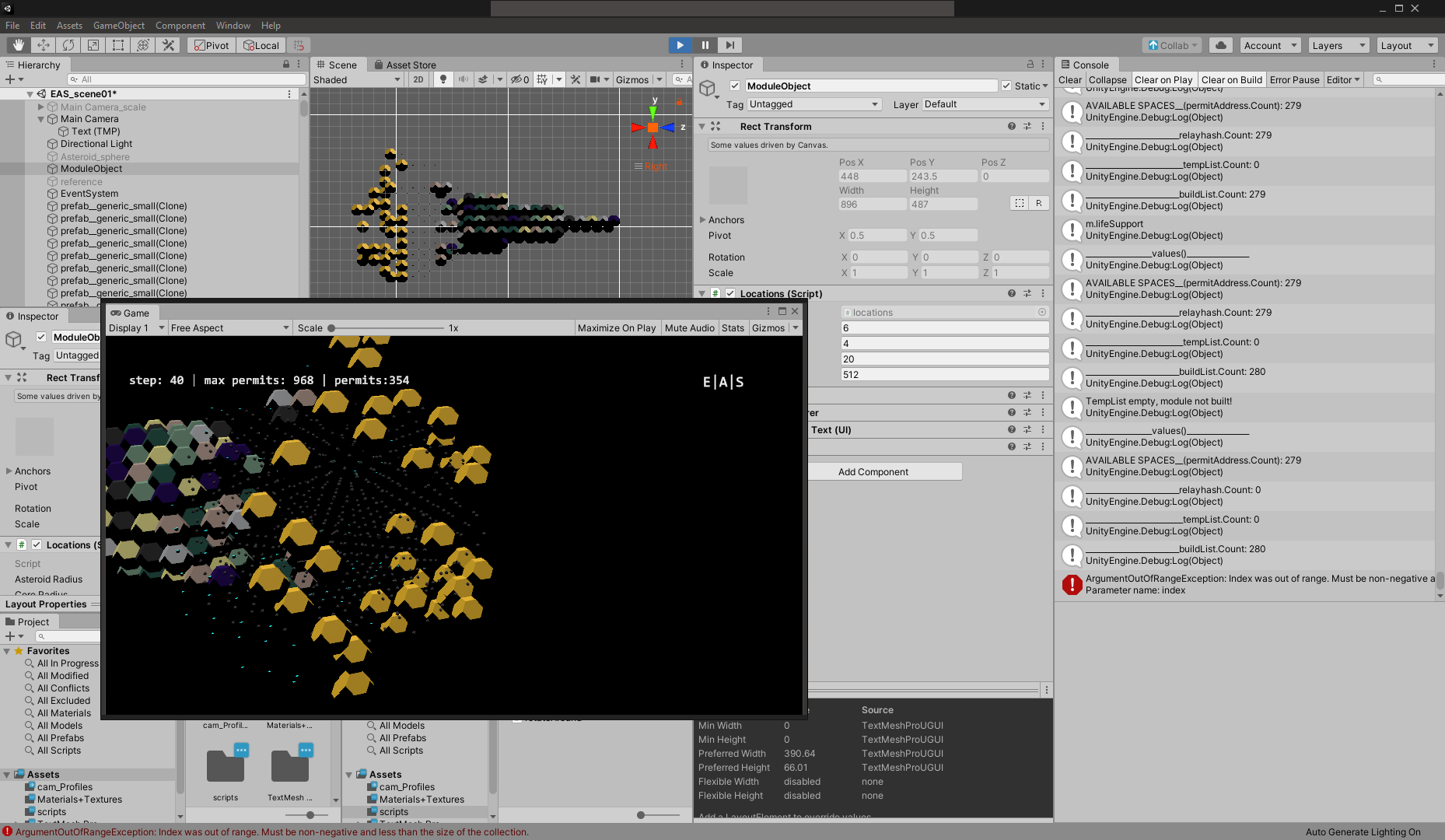
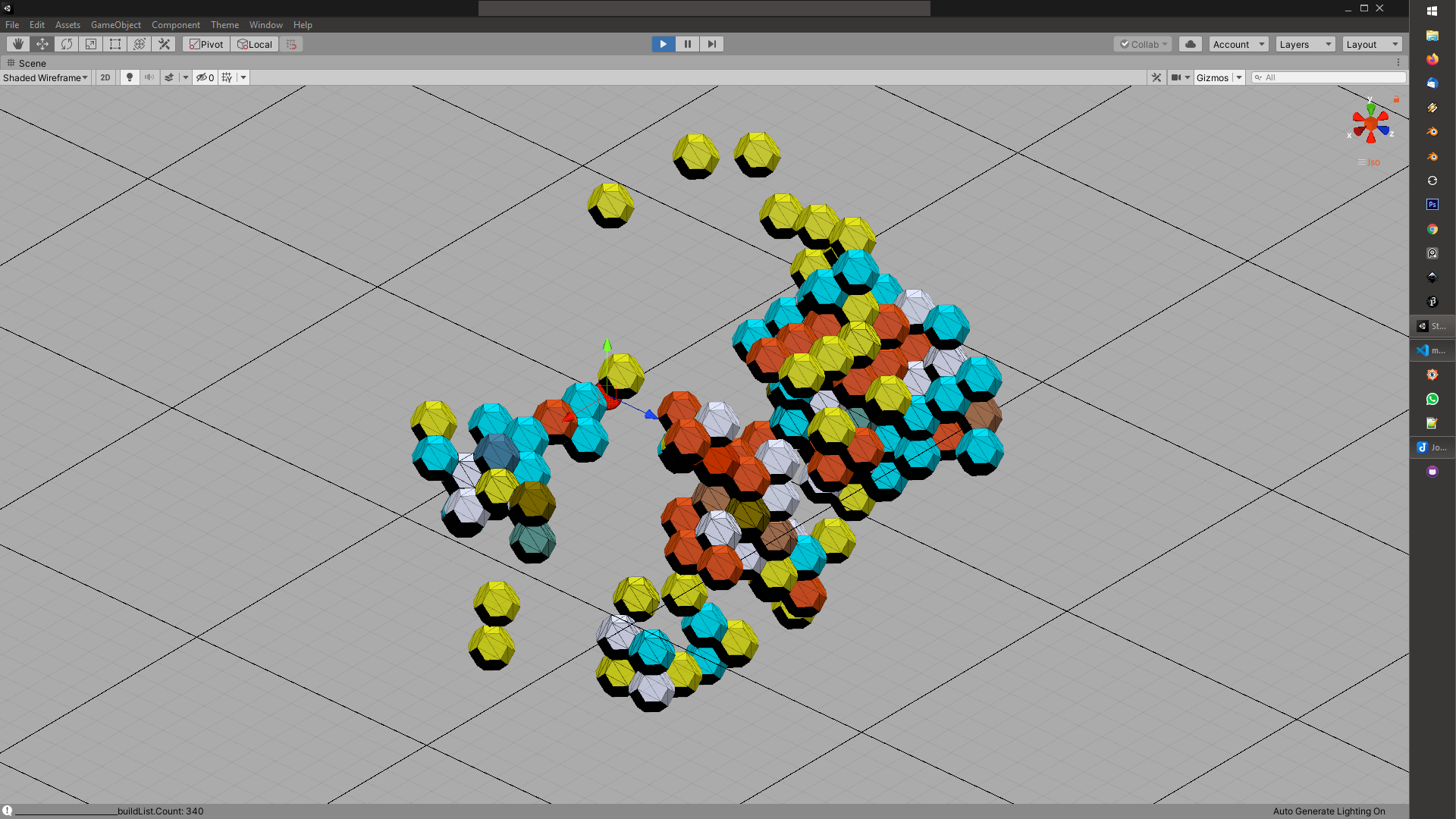
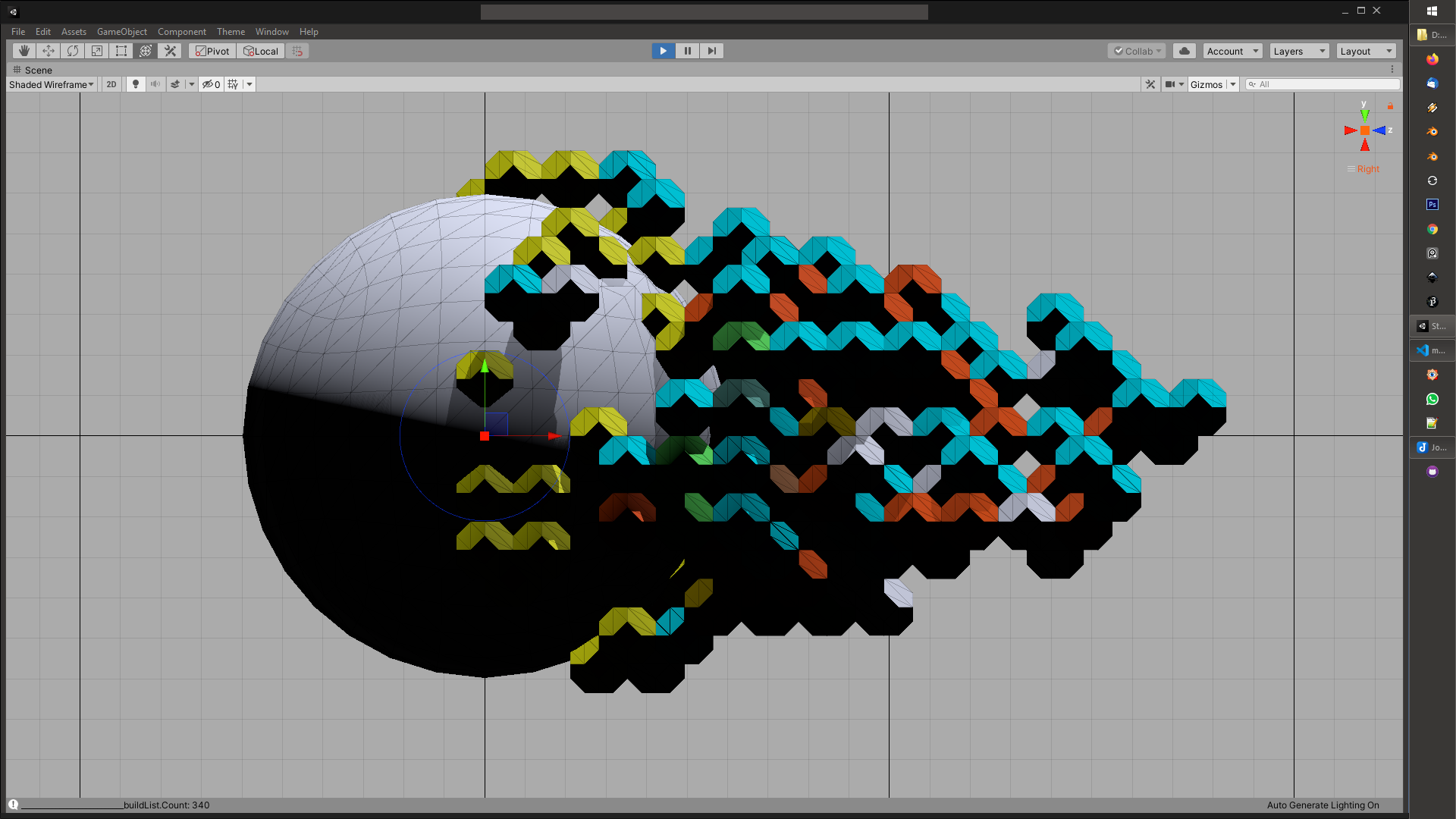
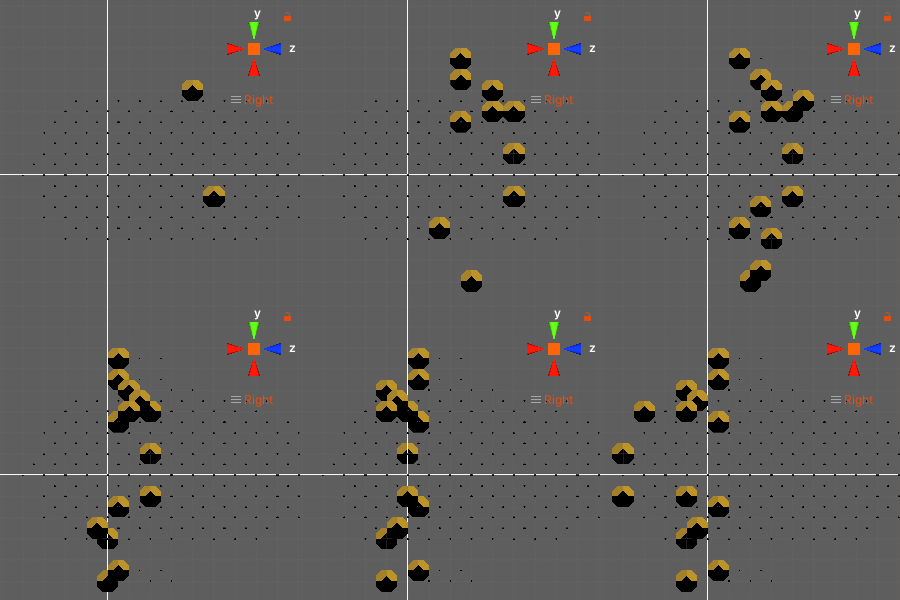
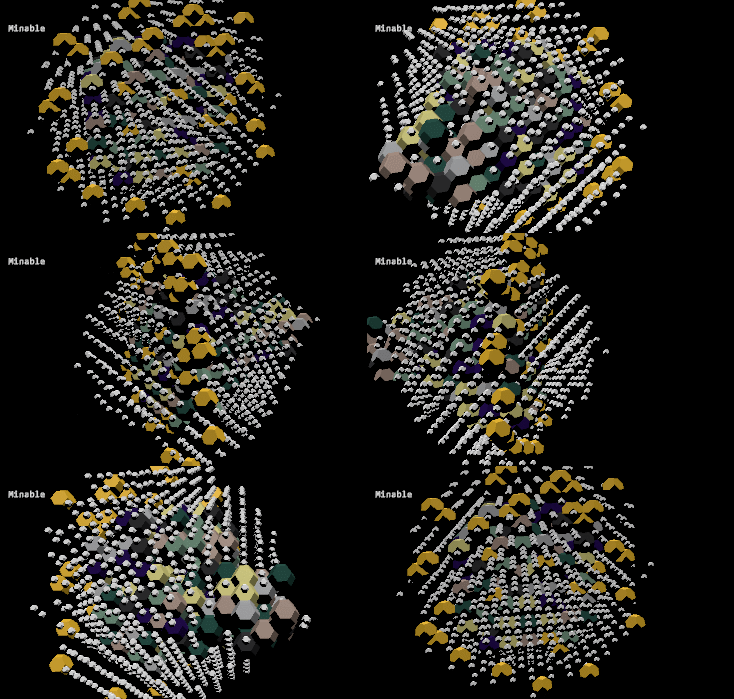
The following images offer a first impression of the Module Assignment application in Unity3d. Assuming a spherical form (which simplifies computational work), modules of different purposes are assigned an address built behind the asteroid.

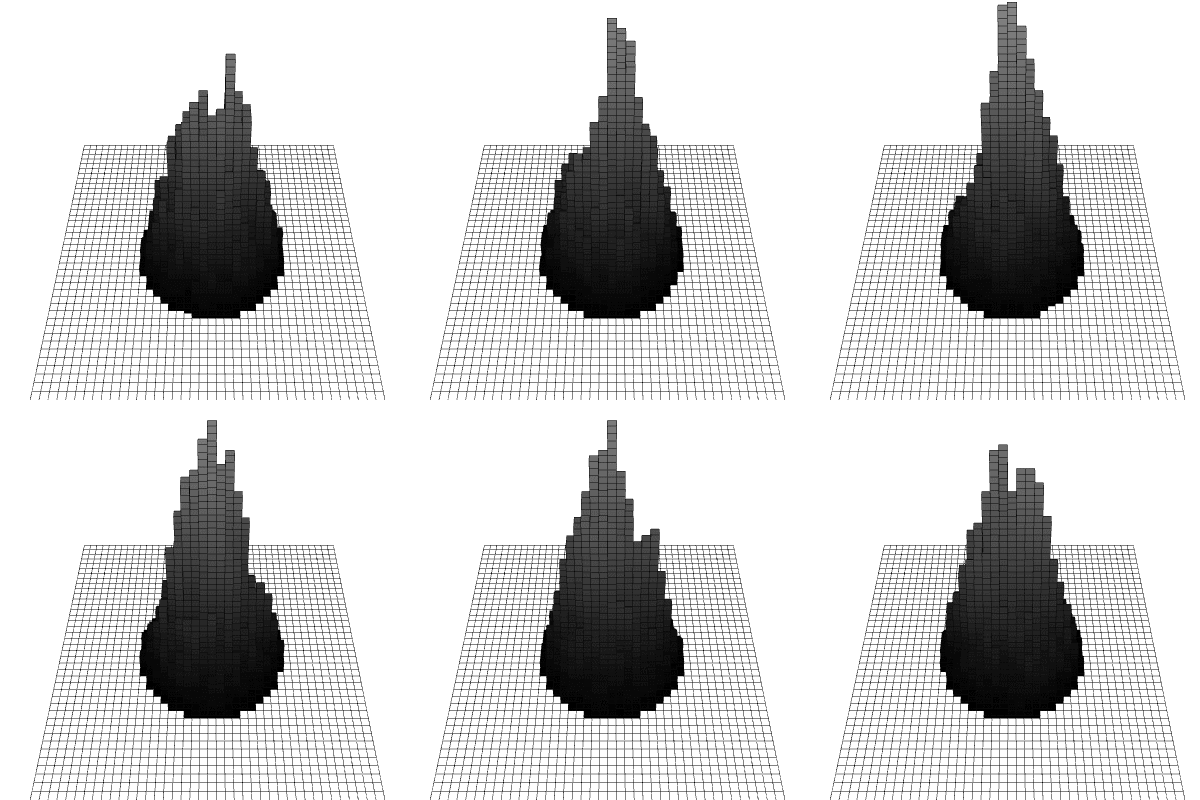
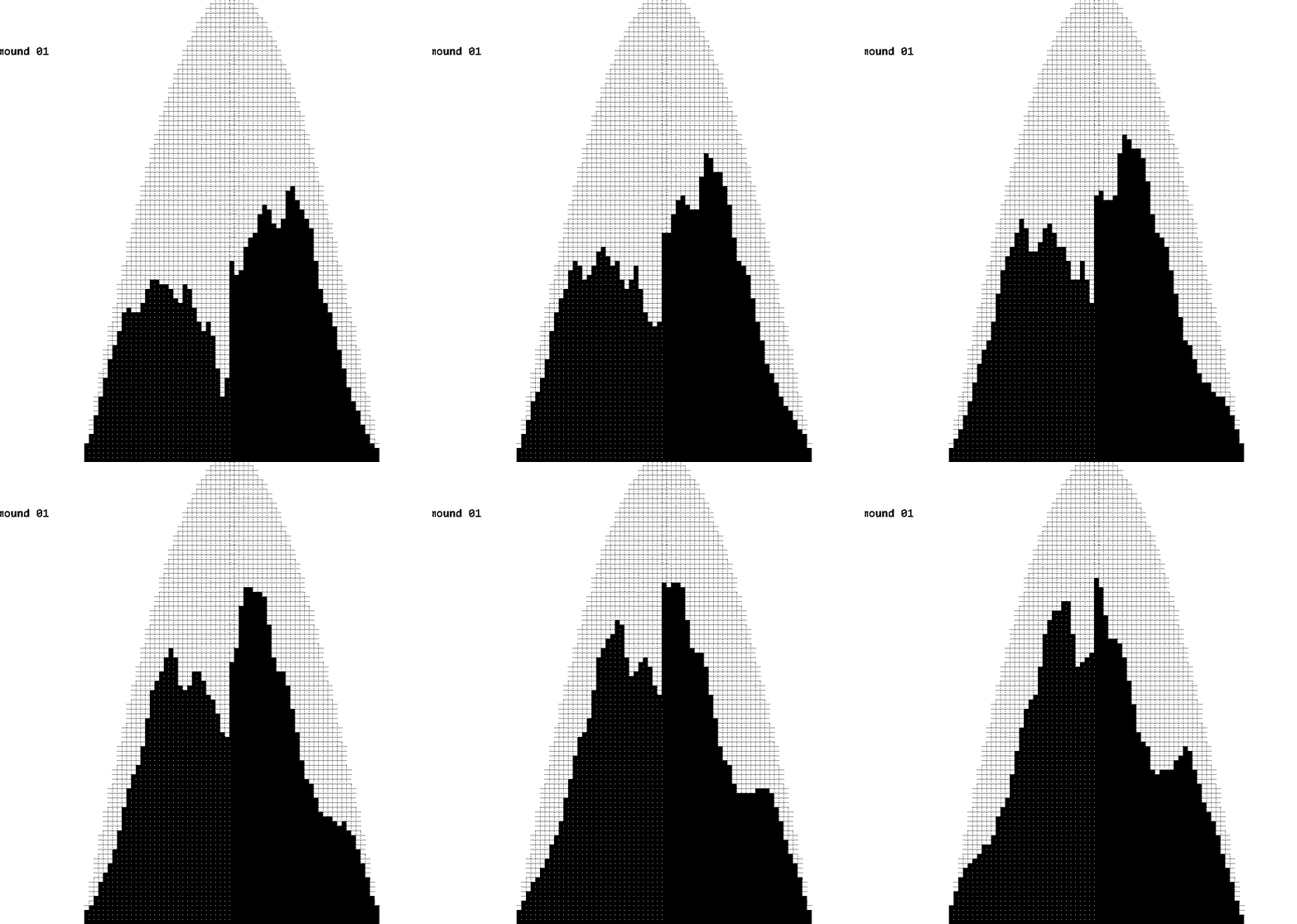
Initial prototyping in Processing for form visualization:

Development in Unity3d:

Asteroid_Starship_mineAble_development_unity3d
EvolvingAsteroidStarship(3)
Evolving Asteroid Starship

Mineable addresses and mining module movement toward the asteroid core:

miningmodule
Asteroid_mining_modules
Asteroid_mineAble

Module Address Algorithm schematic

Artist impression 3D media render.

More information about Evolving Asteroid Starship can be found on the SEADS website.


Data Sculptures

· ·

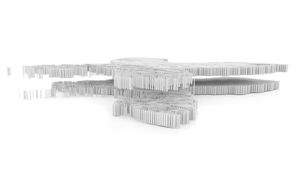
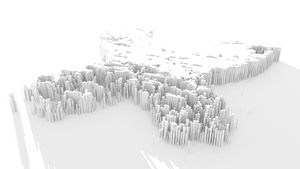
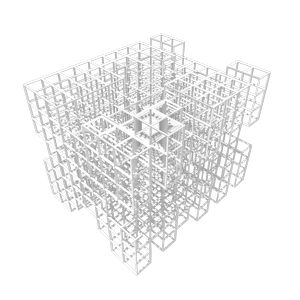
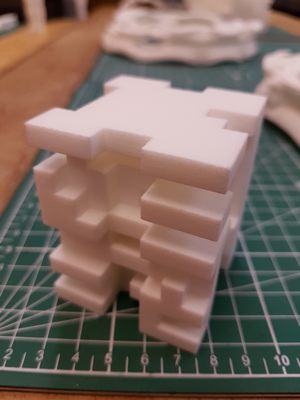
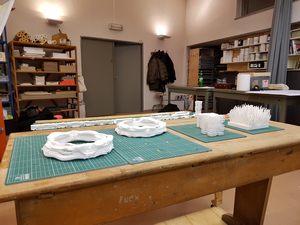
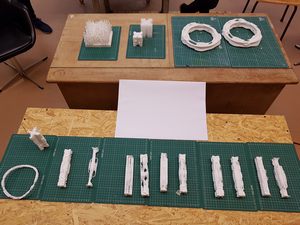
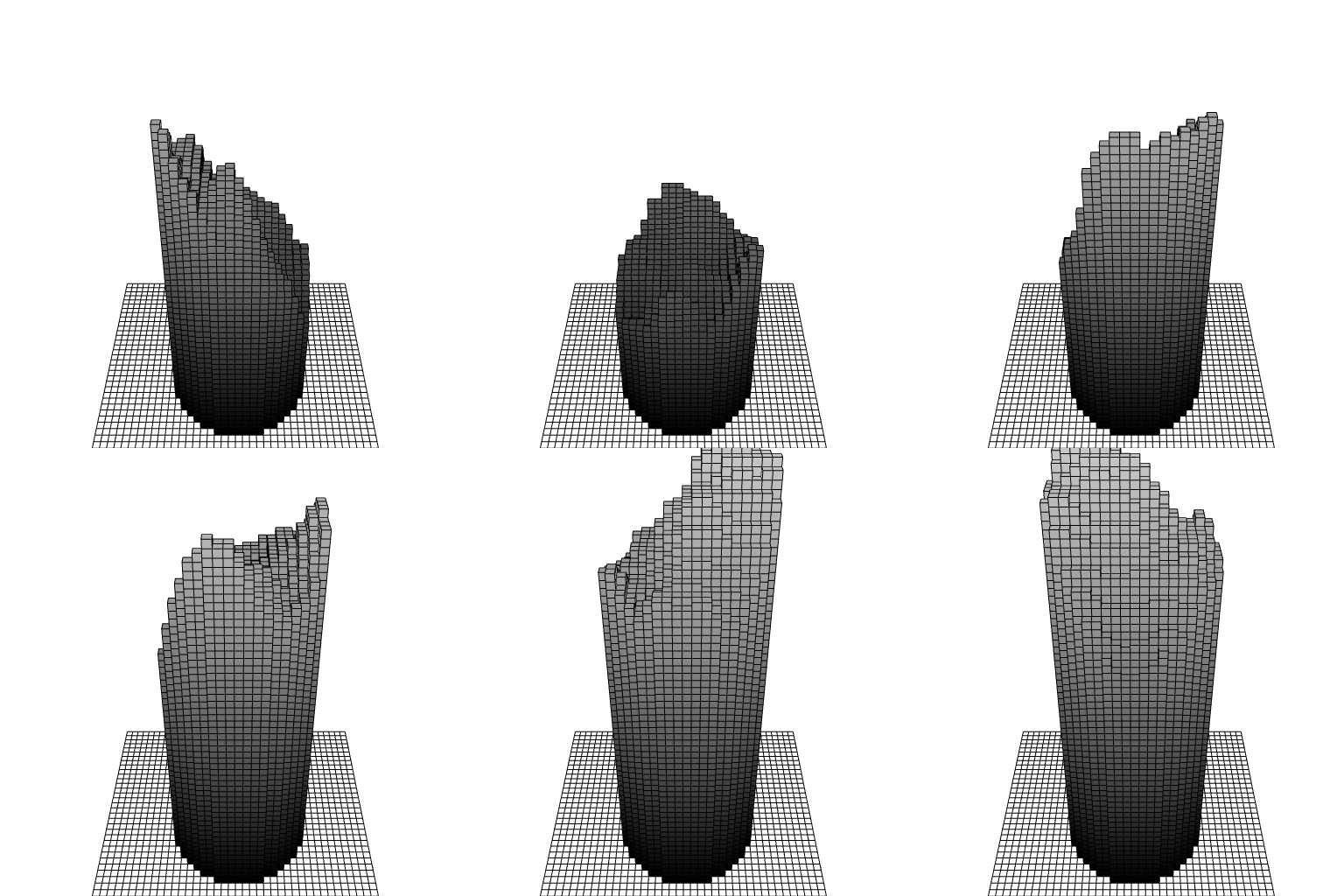
Screenshots of current data sculpture studies. I am investigating generative methods and workflows for use in two different collaborative projects using Processing for creation and prototyping, Unity3d and Blender. All models are based on data, derived from scientific hardware labeling (EoE).

Engines of Eternity is a series of mixed media art installations contemplating the concept of cultural immortality based upon research that investigates changes in RNA sequence under the influence of a micro-gravitational environment.
The resulting data is used to build multi-sensory installations.


data_sculpture_48
data_sculpture_32
data_sculpture_25
data_sculpture_49
data_sculpture_12
data_sculpture_08
data_sculpture_04

PixelWall

· ·

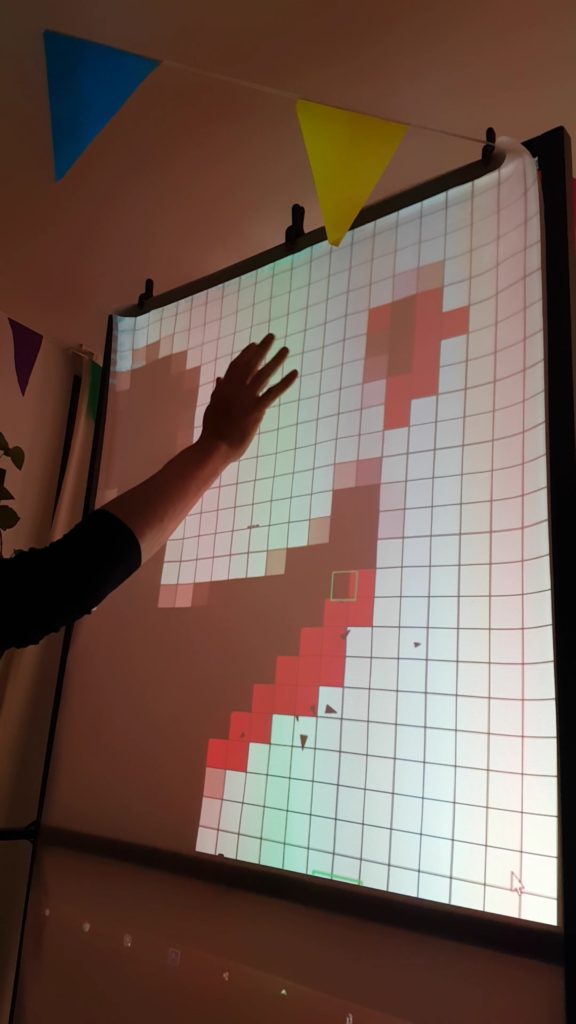
A Processing script is fed by a streaming video of a regular webcam. The video is downsampled, read, and manipulated frame by frame and juxtaposed by a group of random ‘agents’ attracted to the frame’s hotspot, a place where the most changes in pixel density occur.


Tools used:
Processing (Java) for programming.
Webcam
Projector positioned behind the wall.
Smooth tracing paper suspended on a metal frame.

Generative Sketches

· ·

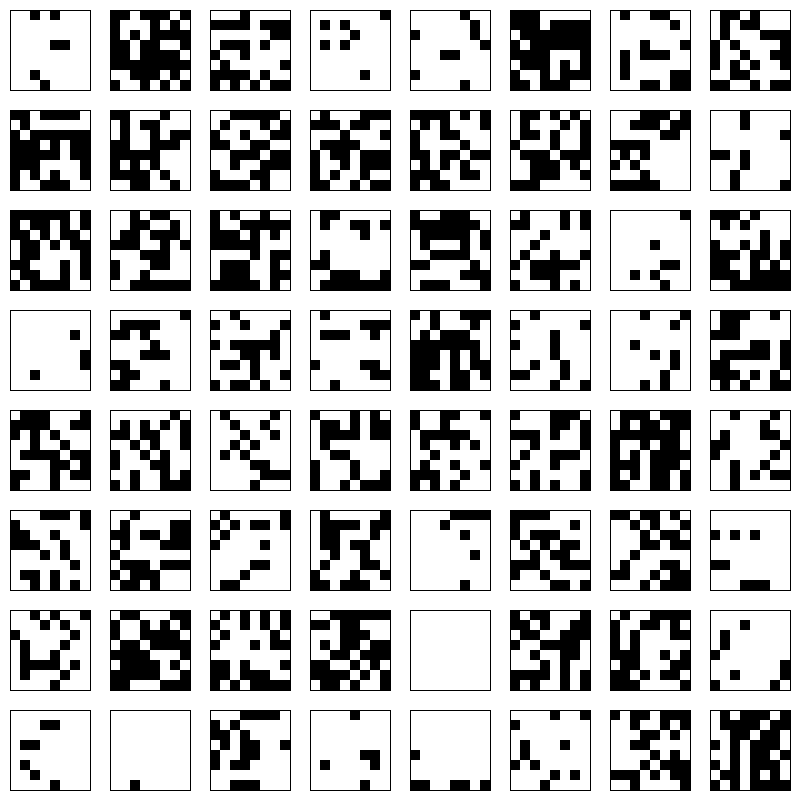
A collection of P5js sketches I wrote recently.
More sketches can be found here:
https://editor.p5js.org/Hieronymus/sketches
and
https://openprocessing.org/user/149290?view=activity&o=28#sketches

Some sketches contain animation. Click or tap to start:

  • « Go to Previous Page
  • Page 1
  • Page 2
  • Page 3
  • Page 4
  • Go to Next Page »

Primary Sidebar

Pages

  • home
  • Publications
  • About

selected work

  • Panocular project
  • Random Acts of Privacy
  • For the Record, Unsettled
  • Burning Through History
  • Silent Voices
  • Face Values?
  • Pump Paradise
  • Ai Generated Satellite Images
  • Olinda[i]
  • Critical Observation
  • Tensor Sympathy
  • Evolving Asteroid Starship
  • Data Sculptures
  • PixelWall
  • Generative Sketches
  • Generative Landscapes 4
  • Generative Landscapes 3
  • Generative Landscapes 2

jeroenv

Copyright jeroenv © 2026 ·